











Europe Bans U.S. Food Additive That Experts Claim Are Making Americans Sick
What if I told you the bread you made avocado toast on yesterday was potentially dangerous — would you believe me? If I went to the list of ingredients and pointed out how potassium bromate could potentially be dangerous, would you roll your eyes and call me crazy? What would you say then if I mentioned that Europe has officially banned the use of potassium bromate in all food production as it’s been linked back to the growth of tumors?
While the FDA has made statements claiming the proper manufacturing process of potassium bromate converts it into a harmless substance, India, China, and now Europe have banned it from food products. Professor Erik Millstone, a food additive expert at the University of Sussex, told CBS News “There is evidence that it may be toxic to human consumers, that it may even either initiate or promote the development of tumors.”
Why, you might ask, would we be using potentially harmful substances in food production in the first place? Potassium bromate is used to strengthen dough. Plus, synthesizing chemicals in a lab costs way less than manufacturing real ingredients that won’t stay fresh as long. A big lesson here: Just because the FDA considers something safe for consumption, doesn’t mean that it can potentially be harmful if further research reveals it to be down the road.

Potassium bromate isn’t the only additive still available for consumption within the United States. Other potentially harmful chemicals — ones we still use but have been banned in other nations — are titanium dioxide (an artificial food coloring), brominated vegetable oil (used to emulsify citrus-flavored soft drinks to keep them from separating during travel), propylparabens (used to preserve “fresh” food) and many more.
But why would the FDA allow harmful additives in the foods we eat on a daily basis? Simply put, there’s a loophole in the law of food production that allows the FDA to claim a food is GRAS, meaning, Generally Recognized As Safe. For a company to claim an additive’s GRAS status, the it must use compounds that are considered commonly safe among leading scientists. If the additive makes the cut, it flies under the radar of the FDA.
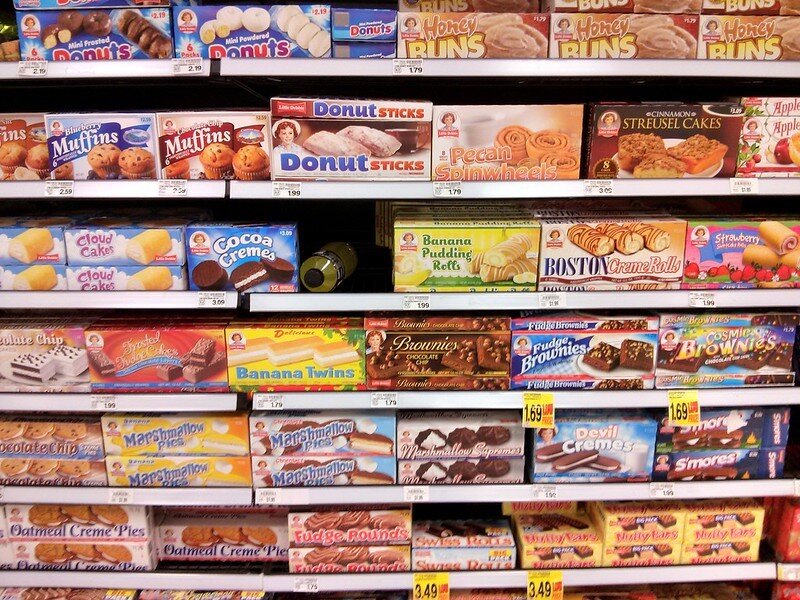
Nutritional information is there for a reason, whether we comb through every ingredient with a magnifying glass or not. For me, I’m always curious to see what’s inside some of my favorite snacks (I’m still shocked that Oreos are vegan, tbh) and I encourage you to be curious, too.