In the Avengers’ fight to save the galaxy from Thanos, one harebrained scheme hatched by the team’s resident geniuses involved creating a faux Infinity Gauntlet…
The protein-ification of everything continues, and now your morning coffee is getting involved. Folgers is launching a new line of functional coffees led by Folgers…
Andy Reid’s love of cheeseburgers has become nearly as synonymous with the coach as football itself. He uses them as metaphors, promises them to players,…
SPAM is bringing sweet heat to its signature canned meat with the nationwide launch of SPAM Hot Honey, the brand’s newest permanent flavor. To celebrate,…
Dr Pepper’s 23-flavor formula has made its way into plenty of unexpected places over the years. Chicken tenders can officially join the list. Slim Chickens,…
Jameson is ready for some football. The Irish whiskey brand recently announced a multiyear partnership as the Official Spirits Sponsor of the NFL, and it’s…
Chicken tenders getting their own festival was only a matter of time. The undefeated combination of crispy breading, juicy chicken, and something saucy to drag…
Nick DiGiovanni’s ascent through the food world has been remarkably quick. He went from Harvard grad to MasterChef competitor and Gordon Ramsay protégé before building…
Panda Express is bringing the energy of Taiwan’s legendary night markets to select markets with its new Taiwanese Popcorn Chicken. The American Chinese fast food…
Jollibee is teaming up with DreamWorks Animation’s upcoming film Forgotten Island for a collaboration that goes considerably deeper than throwing movie characters on a Chickenjoy…
Delicious Native American Alternatives To Traditional Thanksgiving Foods
Photo: Fake Food Free
Thanksgiving is on the horizon, followed by Native American Heritage Day on November 29. While the holiday is often framed as a celebration of unity between settlers and Native Americans, history tells a more complex story. It took nearly a century after Europeans arrived before the Wampanoag and neighboring tribes began interacting with the English, and even then, their alliance was rooted in survival, not friendship. Long before Thanksgiving existed, tribes like the Wampanoag celebrated harvests with their own traditions, such as the Aquinnah Wampanoag’s “Cranberry Day” on Martha’s Vineyard.
The Thanksgiving holiday remains a polarizing one. For many, it’s a time to reflect on family and gratitude, but it’s also an opportunity to acknowledge the crucial role Native Americans played in shaping America, despite centuries of discrimination and erasure. Established in 2009, Native American Heritage Day honors Indigenous culture as a vital part of the American identity. In that spirit, explore these Native American-inspired alternatives to traditional Thanksgiving dishes—a delicious way to celebrate and learn.
Display mode
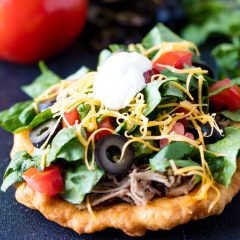
NAVAJO FRYBREAD
Existing somewhere between a taco, pupusa, and chalupa, Indian frybread is a simple flatbread with a 160-year history. As the Smithsonian Magazine reveals, the idea was borne from resourcefulness in the face of adversity. After being cruelly forced to relocate 300 miles away to New Mexico, one of the ways that Native Americans adapted to the unfamiliar arid climate was by making frybread. White flour, processed sugar, and lard were some of the few ingredients provided by the US government during their relocation.
Today, however, oil is used in place of lard; all you need is oil, flour, baking powder, salt, and milk, per AllRecipes. Traditionally, frybread isn’t sweet, it’s a blank doughy canvas perfect for all sorts of toppings. You can easily make them sweet with sugar, honey, or a fruit topping, though. Or, make Navajo-style tacos with ground meats. They are so popular that reservations sometimes hold frybread-making competitions during powwows (large tribal meetings).
INDIAN-STYLE DONUTS
According to the Two Row Times, Indian-style donuts are traditionally enjoyed on “No:ia” (pronounced, new-ya), the New Years celebration for the Six Nations of the Haudenosaunee (popularly referred to as the Iroqouis) peoples who reside in Canada. They have a 400-year history that can be traced back to a pastry called “oliebol,” introduced by Dutch colonizers and also enjoyed on New Years.
Not to be confused for India’s (by way of Persia, per The Times of India) gulab jamon, Indian-style donuts are plain cake donuts made with basic baking ingredients. Unlike the typically spherical kind, shapes can vary based on the occasion. A diamond shape is common for funerals, whereas you might receive an animal-shaped one on father’s day that honors the family lineage. Though traditionally a New Years treat, they are now eaten year-round.
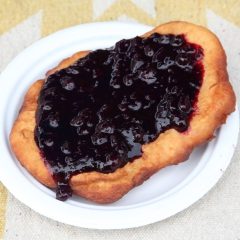
WOJABI
Can’t imagine Thanksgiving without cranberry sauce? Well, we’ve got that covered. Wojabi is a Native American berry sauce that is used as a topping for sweet foods like pancakes, waffles, and ice cream, and Thanksgiving classics like turkey and ham. Native Americans pair it with frybread.
According to A Baker’s House, wojabi is traditionally made with chokeberries, blueberries, huckleberries and/or blackberries, but you can use others too.
Photo: Fake Food Free
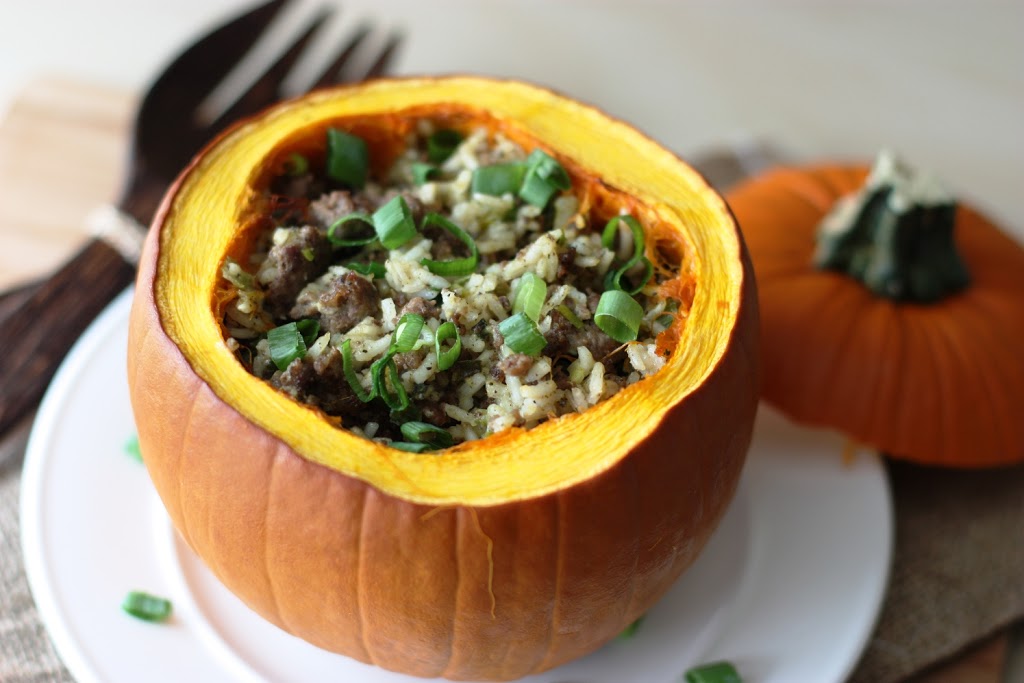
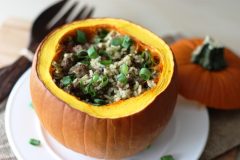
HIDATSA STUFFED SUGAR PUMPKIN
No food is more synonymous with the fall season than pumpkin. Created and eaten by The Great Plains’ tribes, hidatsa-stuffed sugar pumpkin is the holiday recipe you didn’t know that you needed. Sweet, savory, and seasonal, it’s made with a hand-sized sugar pumpkin that’s hollowed and stuffed with wild rice, eggs, sage, and ground beef. Venison and buffalo were used traditionally, per Fake Food Free, as they were two popular proteins.
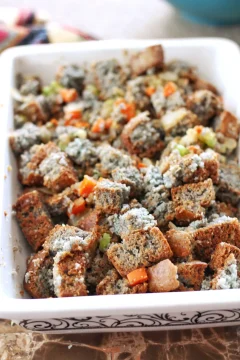
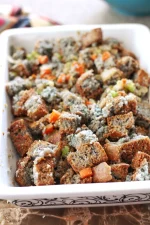
BLUE CORNBREAD STUFFING
It wouldn’t be Thanksgiving without a steaming tray of delicious stuffing. This recipe from The Fancy Navajo puts a colorful and textural spin on stuffing with blue cornbread. It’s just as easy to make, too! Using everyday pantry items, simply cube and combine with sautéed onion, carrots, celery, and sage, or your choice of ingredients. Availability is one caveat, though. Blue corn meal, which comes from a blue and purple-bespeckled corn called Hopi maize, is the rarest variety of popular cornmeals.
Yellow corn meal as a substitute is perfectly fine, but we highly recommend using blue when you try this recipe for the first time. It’s the sweetest variety and has an intense earthy flavor that complements savory flavors.
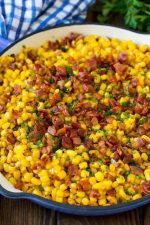
COMANCHE FRIED CORN
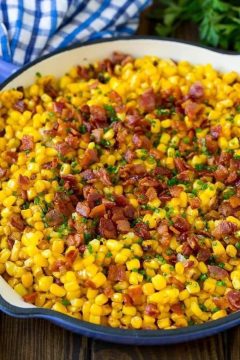
While we’re on the subject of corn, according to History, Native Americans have been cultivating corn (or maize) as far back as 8,000 years ago. This particular recipe was invented by the Comanche, who were particularly adept at preserving and cooking foods while traveling and dehydrated meats and corn were two favorites. According to Smithsonian Magazine, it consists of dried corn, chopped beef (buffalo, bacon, or traditionally, bison), and onion. It’s simple, hearty, and the perfect recipe for an Indigenous-inspired Thanksgiving.
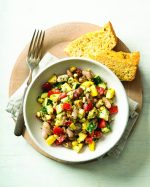
THREE SISTER'S SUCCOTASH
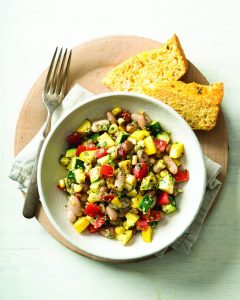
The name of this next dish was inspired by the Native American approach to agriculture, per Southern Living. Three Sister’s Succotash is a savory hodgepodge of corn, pole beans, and yellow squash (three essential crops traditionally planted together), and thick-cut bacon. The three were grown together because corn stalks help support the squash and beans, which benefits the trifecta by enriching the soil. And, squash produces massive leaves that shade the three, further reinforcing their symbiotic relationship.
The word itself means “broken corn kernels” and comes from the Narragansett (a Rhode Island-based tribe) term “sahquttahhash.”
All aboard! Disney World Resort has rolled out its foodie guide for the 30th anniversary of the EPCOT International Food & Wine Festival. Starting August…