














New Rule Forces Chain Restaurants To Start Labeling Highly Salty Foods
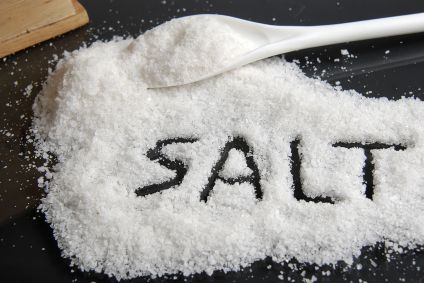
Today the New York City Board of Health will start implementing a new rule approved back in September of 2015 to start labeling any exceedingly salty foods being served at chain restaurants that go over the recommended 2,300 milligrams — or one teaspoon — of salt.
Strap yourselves in nice and tight fast food companies, because you’re about to get fuuuuuuucked.
This new rule will only affect chains of 15 restaurants or more across the United States and a variety of movie theaters and concession stands.

The whole point of the new rule is to help American citizens better combat the number one killer in America: cheeseburgers! Na, I’m just playing, it’s actually heart disease. Heart disease is out to get you. Cardiovascular disease accounts for roughly 17 million deaths worldwide a year. Death from heart complications makes up 30% of global deaths, making it the leading killer of all y’all.
The move will also force many restaurants to find new ways of making some of their food. Seeing the large salt shaker symbol (which will be used as the new label nationwide) is intended to draw the consumer’s eyes to the amount of salt it contains in the hopes of spurring them on to be more conscious of what they eat.
Many restaurant owners are having trouble getting on board with the new rule, claiming that following our nation’s federal guidelines for food would be much easier to deal with, rather than a wide variety of state rules that could make things even more difficult as a restaurateur, depending on where you live.

“I understand the [New York] City Board of Health is very pleased to lead the way on these nutritional initiatives,” says president of the New York State Restaurant Association Melissa Fleischut. “But what we see is that it ends up creating a patchwork of regulations across multiple states.”
It’s interesting to me that they decided to make the change from words to pictures in order to inform consumers what exactly they’re putting in their bellies. In comparison, people have been trying to change the labeling on cigarette packs for decades, yet the U.S. labeling laws are so lackadaisical that any warnings usually come on the side of the pack, in small letters, and in the same color as the pack, making them virtually indistinguishable.
Both salt and tobacco can have dire effects on the cardiovascular system, so perhaps this is the start to a new era where pictures replace text on warning labels. Who knows? Maybe next they’ll start putting pictures of car crashes on beer bottles.
Image Source: Crain’s, Food Navigator, American Heart Association