














Lab-Grown Meat Just Took A Big Step Forward, Thanks to ‘Forever’ Cow Cells
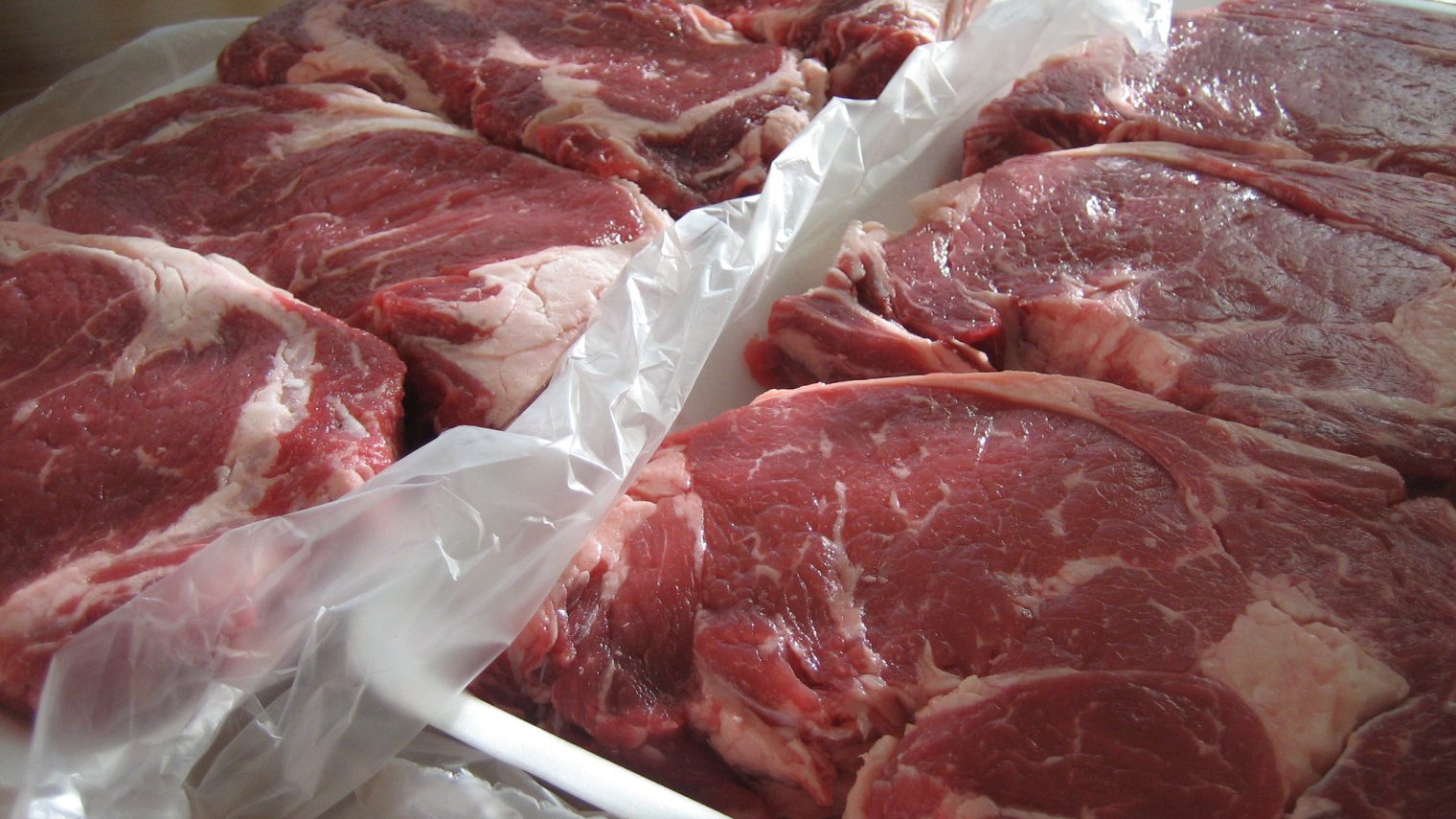
In the last few years, there have been incredible advancements towards making cultivated meat a scalable source of protein for consumers. In June, researchers at the University of Edinburgh’s Roslin Institute had a big breakthrough that brought us closer to real lab-grown bacon, and now a new study, conducted by researchers at the Hebrew University of Jerusalem and Believer Meats, marks a major step towards making mass-cultivated beef and lamb affordable.
Led by Professor Yaakov Nahmias at the Grass Center for Bioengineering at Hebrew University, the study, now published in Nature Food, demonstrated how cow cells can become naturally regenerative indefinitely, or in other words, immortal. Previously, bovine cells, which relate to cells derived from cattle tissue, required genetic modification in order to achieve immortalization.
In 1912, a study led by the French surgeon and biologist Alexis Carrel proved that chicken cells could be immortalized, resulting in cells that lasted until 1946. However, it was believed to be impossible in larger mammals, which have a natural resistance to cellular transformation.
“This work adds valuable new insights to the rapidly expanding knowledge base supporting cultivated meat development. Spontaneous immortalization attempts often fail because researchers simply abandon the process when cell growth slows. This study, demonstrating for the first time that bovine cells can be spontaneously immortalized, marks an exciting advance,” says Dr. Elliot Swartz, Sr. Principal Scientist for Cultivated Meat, The Good Food Institute.
“By detailing the sequence of events that occur during cell line development, it provides a roadmap for non-GM (genetically modified) approaches to be used for commercial cultivated meat production across the full range of animal species used in food production.”
Animal cells naturally enter a state known as senescence, or biological aging, which is when functional characteristics begin to slow and deteriorate. Basically, the regeneration process of cells, known as mitosis, stops producing new daughter cells, which is what cells naturally do as animals and humans age. Using genetic modification, scientists can bypass the limitations of mitosis, which has been a cause of regulatory and safety concerns.
“What worked relatively quickly in chickens became an exhaustive pursuit in bovine cells. We had to continuously culture bovine cells for more than 18 months before the first self-renewing colonies emerged,” said Professor Nahmias.
The researchers spent over 500 days growing isolated cells from both Holstein and Simmental cow species. They initially returned to assess their progression beyond senescence at day 180, only to find the cellular growth seemingly inactive. It wasn’t until 240 cell generations that new bovine cells began to emerge, still retaining their natural DNA repair capabilities, which indicated that they were able to successfully regenerate without genetic interference.
“Months stretched into years, and perseverance replaced certainty. Then, after over 400 silent days, colonies suddenly appeared—a true eureka moment that overturned what we thought we knew about bovine cells,” says Professor Nahmias.
Large mammal livestock like cows are the world’s biggest agricultural contributors to deforestation, water depletion, and global greenhouse gas emissions. According to UC Davis, a single cow can belch 220 pounds of methane into the atmosphere each year, which is 28 times more potent than carbon dioxide.
Cultivated meat has the potential to significantly reduce, if not replace altogether, animal farming for meat, and this study addresses its biggest hurdles, which are the cost and sustainability. Click here to read the official study.