













U.S. Expands Free School Lunch Program, Making Millions Of Kids Eligible
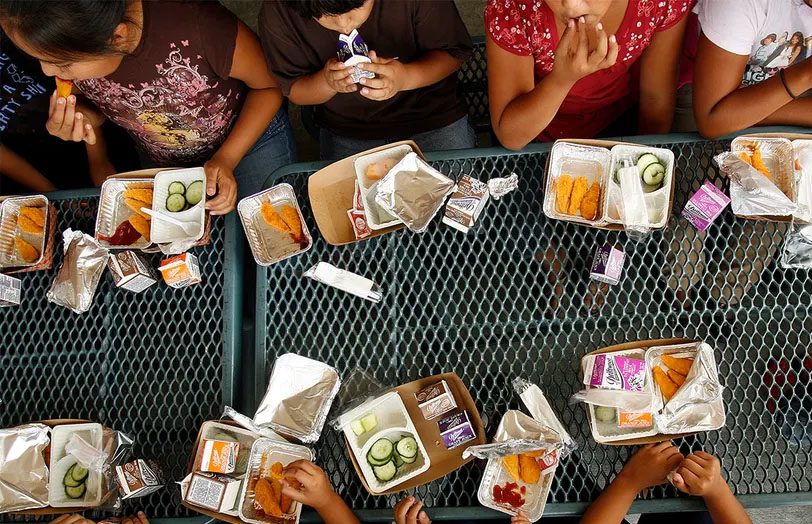
The U.S. Department of Agriculture recently announced an expansion to its income-based public benefits. As a result, millions of students that were previously ineligible, will now receive school breakfast and lunch for free. The expansion is for all schools where at least 25% of families participate in income-based public benefits. According to PBS, the previous threshold to qualify for the benefits was set at 40%. Reducing the threshold will open the benefits to nearly 3,000 additional school districts that serve five million students.
USDA deputy under secretary for Food, Nutrition, and Consumer Services, Stacy Dean told PBS, “While there is still more work ahead to ensure every K-12 student in the nation can access healthy school meals at no cost, this is a significant step on the pathway toward that goal.”

During the pandemic, all students received free lunch regardless of financial status, however, that ended last year. Since then, low-income families have had to contend with rising food costs, which has impacted weekly budgets and forced kids to go without lunch. While the new rule applies to all states, some states have chosen to provide free lunch to all students regardless of income. Those states include California, Colorado, Maine, Massachusetts, Michigan, Minnesota, New Mexico, and Vermont.
In those states, a new rule known as Community Eligibility Provision (or CEP) will expand access to universal meals. Families that participate in the program receive federal funding monthly, with supplemental income from the state or local government, rather than having to fill out individual applications. Removing “red-tape” like having to file paperwork actually contributes to hunger.
The expansion has received some pushback though. The Republican Study Committee says that the program is too costly and believes it doesn’t cover the individual income eligibility of each student. As a result, families that don’t qualify can receive the benefits as well. Anna Korsen, policy and program director at Full Plates Full Potential, a nonprofit organization in Maine whose aim is to maximize access to school meals, disagrees and believes that the expansion will make things easier on lots of families.

“The federal poverty guidelines that dictate who gets a free meal and who doesn’t are really outdated,” Korsen said. “There are so many families that on paper don’t qualify for a free meal, and they can get lumped into this group of… families that can afford to pay for lunch or breakfast at school. But really, those families are living paycheck to paycheck.”
While other states haven’t committed to universal free lunch, Agriculture secretary Tom Vilsack believes that the rule change is progress towards providing healthy school meals for all: “Increasing access to free, healthy school breakfast and lunch will decrease childhood hunger, improve child health and student readiness, and put our nation on the path to better nutrition and wellness.”