













Researchers Invent Technology That Extends Shelf Life Of Produce
As the bird flu continues to impact the poultry industry and cost of eggs, companies and scientists are developing food innovations that combat climate change. A team of researchers from MIT and the Singapore-MIT Alliance for Research and Technology (SMART) have invented a way to extend the shelf life of produce.
Using biodegradable microneedles made from silk fibroin protein, they can inject melatonin into plants without triggering a stress response. The microneedles are nontoxic, biodegradable, and tough enough to pierce through thick, waxy skin and reach the inner tissue. There are many places worldwide that lack access to the energy and infrastructure required to preserve food. Microneedle technology offers a sustainable way to reduce reliance on both.
Benedetto Marelli, the study’s senior author, associate professor of civil and environmental engineering at MIT, and the director of the Wild Cards mission of the MIT Climate Project, shared more about the new technology:
“This is the first time that we’ve been able to apply these microneedles to extend the shelf life of a fresh-cut crop. We thought we could use this technology to deliver something that could regulate or control the plant’s post-harvest physiology. Eventually, we looked at hormones, and melatonin is already used by plants to regulate such functions. The food we waste could feed about 1.6 billion people. Even in the U.S., this approach could one day expand access to healthy foods.”
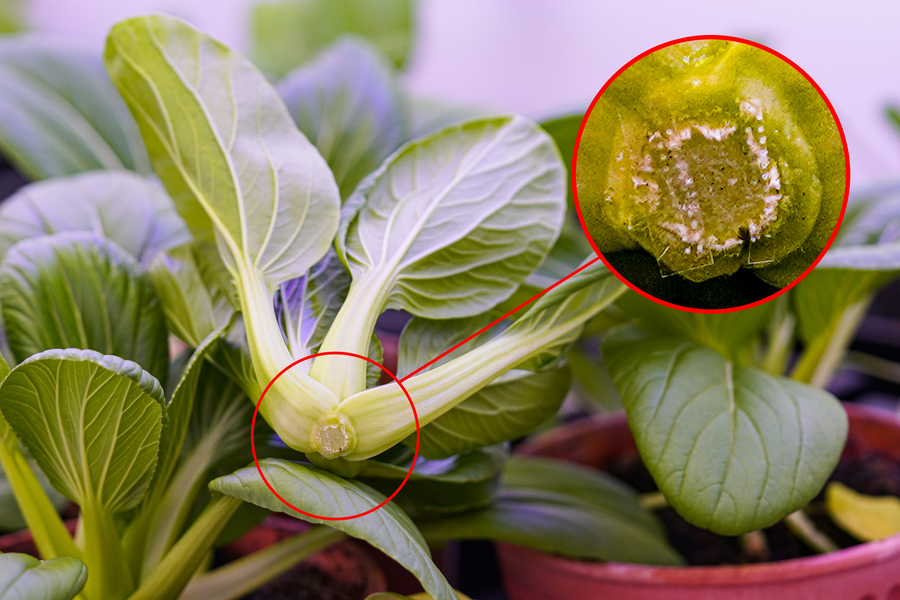
Researchers used bok choy in a study to test ways of extending vegetable shelf life. They attached microneedle patches to the base of two plants—one stored at room temperature, the other refrigerated—and injected them with melatonin. The results: the room-temp bok choy lasted four days longer, and the refrigerated one stayed fresh for an extra ten. If applied broadly, this method could boost how long produce survives in transit to consumers.
Marelli and his team have experimented with various microneedle applications for years, like providing nutrients and monitoring health. Melatonin is widely used by humans to regulate sleep, but also contains a natural hormone that slows plant growth and aging. When injecting bok choy with melatonin, researchers compared the treated plant with untreated ones, monitoring weight, visual appearance, and concentration of chlorophyll.
The leaves of the untreated plants started to yellow in under three days at room temperature, while the plants injected with melatonin still retained their green color on day five and could still be sold by day eight, according to the researchers’ estimates. Likewise for the refrigerated plants injected with melatonin, which remained relatively green for 25 days.
Aside from promising results, microneedle technology still has a ways to go before it can be offered at scale. Researchers are now working on automating the process and are experimenting with other hormones. Click here to learn more about the study.